Chinese Creation Myths: Pangu and Nüwa Shape the World
Discover China’s ancient creation myths—how Pangu split heaven and earth, and how Nüwa mended the sky with five-colored stones to save the world.
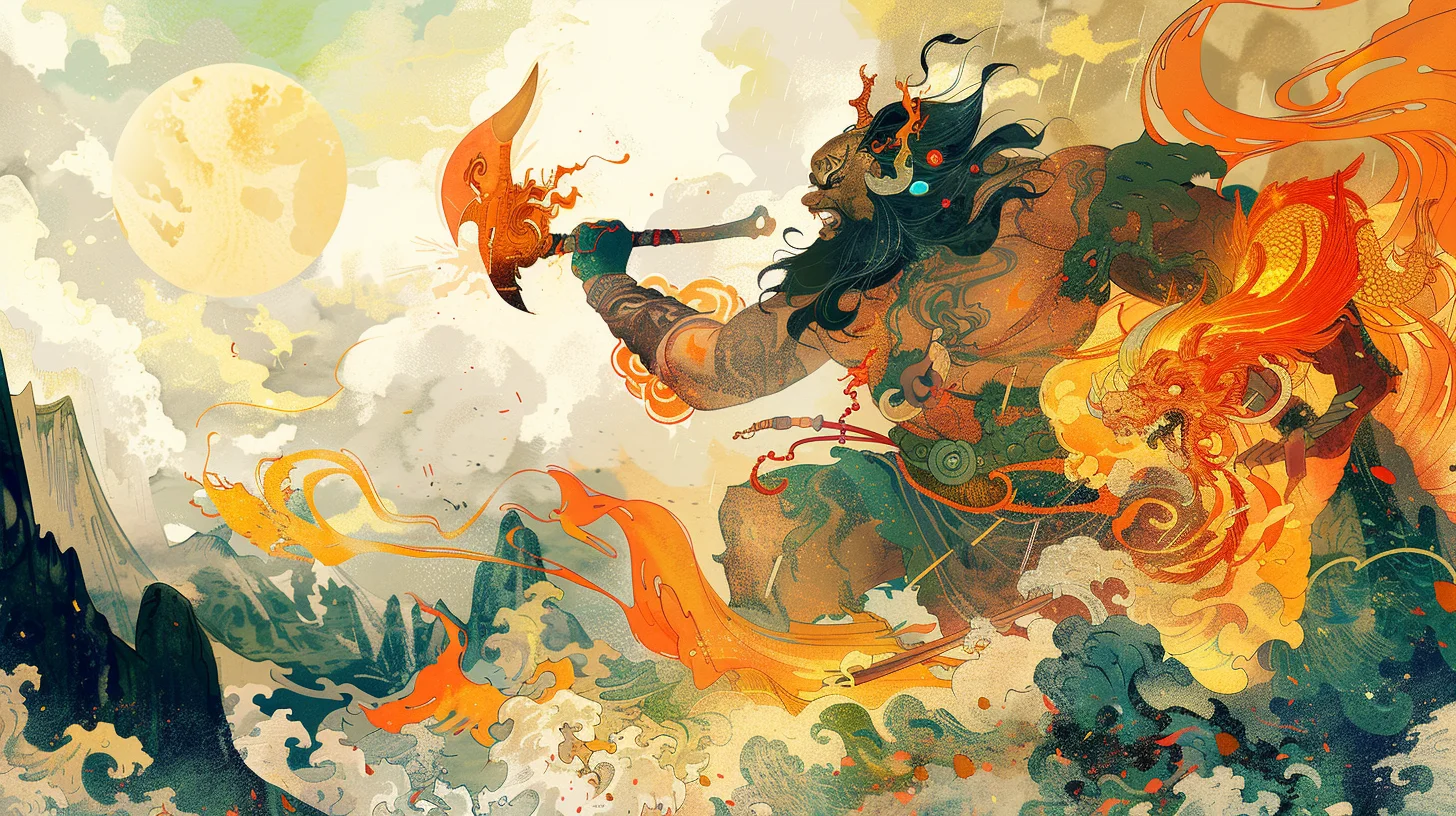
Artistic depiction of Chinese mythology showing powerful gods, flames, and natural forces shaping mountains and rivers, symbolizing the creation of heaven and earth.
Every culture has asked: how did the world begin? In China, answers come from vivid myths passed down for thousands of years. Among the most famous are the stories of Pangu, who created heaven and earth, and Nüwa, who repaired the sky.
Long ago, the universe was said to be like a giant cosmic egg. Inside, the giant Pangu slept for eighteen thousand years. When he awoke, he split the egg with a mighty axe. The lighter parts rose to form the sky, while the heavier sank to form the earth. To keep them apart, Pangu stood tall, growing taller each day. His task was immense, and when he finally lay down to rest, his body transformed into the world itself—his breath became the wind, his voice the thunder, his eyes the sun and moon, his blood the rivers, and his hair the forests. Even his bones turned into rocks and mountains. In this way, the world was born.
But creation did not end there. In another myth, the goddess Nüwa watched over the new world. She shaped humans from clay, giving them life. Yet disaster struck when a battle between gods damaged the pillars of heaven, causing the sky to crack. Floods and fire raged, and humanity was in danger. Nüwa could not stand by. She melted five-colored stones and used them to patch the heavens. She cut the legs of a giant turtle to support the sky, slayed a dragon to stop the floods, and brought balance back to earth. Thanks to her, the world was saved.
These myths are more than stories. They reflect ancient Chinese attempts to explain natural disasters, cosmic order, and the human place in the universe. Pangu represents the raw power of creation, while Nüwa embodies compassion and restoration. Together, their legends show that the Chinese imagination saw the world as fragile yet resilient, shaped by both strength and love.
Even today, artists, writers, and philosophers return to these myths. They remind us that long before science, people used stories to make sense of the cosmos—and in doing so, they created timeless symbols of creation, responsibility, and hope.
Comments
Loading comments...